As parents, we all want the same thing for our children.
We want them to be confident.
We want them to stay focused in school.
We want them to develop discipline—not because they have to, but because it becomes part of who they are.
But in today’s world of constant distractions—screens, social media, short attention spans—helping children build these qualities can feel like an uphill battle.
So the question becomes:
Where do kids actually learn discipline and focus in a way that sticks?
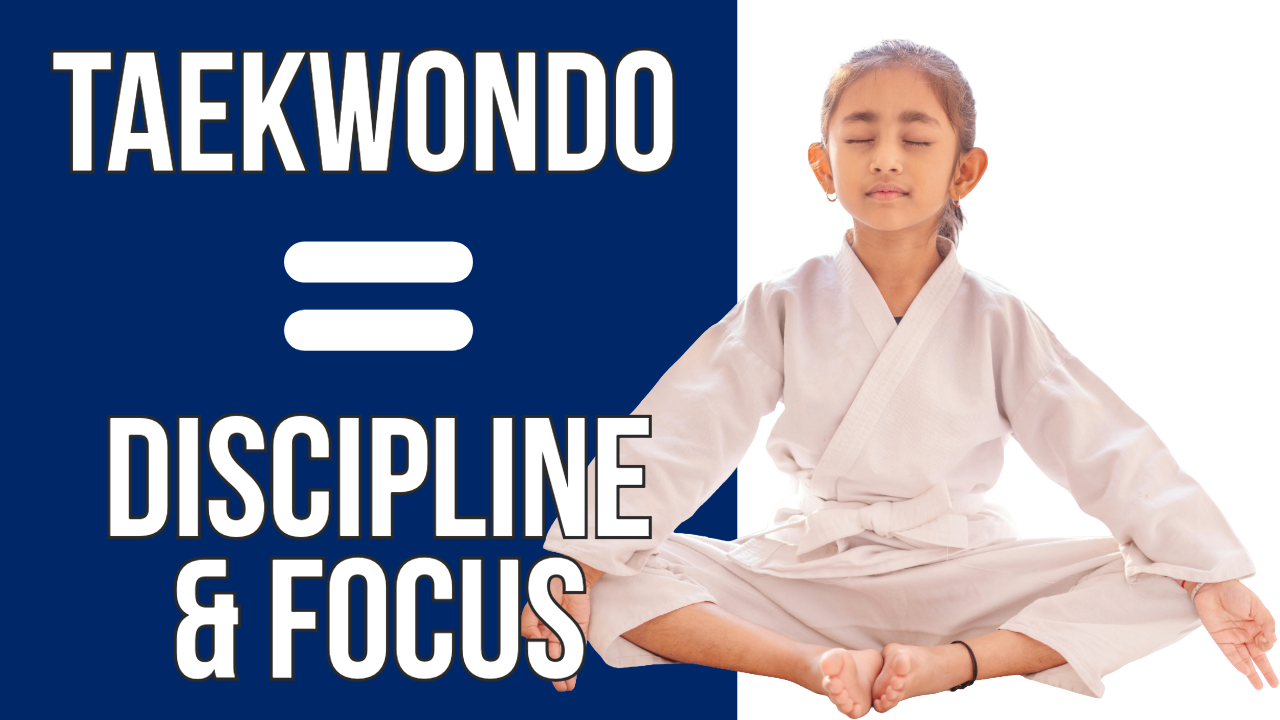
One powerful answer is Taekwondo.
Discipline Isn’t Just About Obedience: It’s About Identity
When most people hear the word “discipline,” they think of rules, punishment, or being told what to do.
But real discipline is something much deeper.
It’s the ability to:
- Do what needs to be done, even when it’s hard
- Stay committed when motivation fades
- Control your actions, emotions, and reactions
In Taekwondo, discipline isn’t taught through lectures, it’s built through experience.
Every class reinforces structure:
- Students line up with purpose
- They follow instructions with precision
- They practice techniques repeatedly
At first, it may feel like routine.
But over time, something powerful happens…
Discipline shifts from something external (rules) to something internal (identity).
Your child stops needing reminders—and starts holding themselves accountable.
Focus Is a Skill—And It Can Be Trained
Many parents today struggle with one common issue:
“My child just can’t focus.”
But here’s the truth:
Focus is not something kids either have or don’t have. It’s something they develop.
Taekwondo is uniquely effective at training focus because it demands:
- Attention to detail (stances, movements, timing)
- Listening skills (following multi-step instructions)
- Mental presence (staying engaged throughout class)
When a child is practicing a kick or a form, they can’t be distracted.
If their mind wanders, their technique falls apart.
So they learn—quickly—that focus leads to success.
And the best part?
This focus doesn’t stay on the mat.
Parents often notice improvements in:
- Classroom attention
- Homework completion
- Listening at home
Because once a child learns how to focus, they can apply it anywhere.
Confidence Comes From Doing Hard Things
Confidence isn’t built by telling kids they’re amazing.
It’s built by giving them challenges—and helping them overcome them.
In Taekwondo, children are constantly pushed just outside their comfort zone:
- Learning new techniques
- Testing for belt promotions
- Performing in front of others
At first, these moments can feel intimidating.
But with guidance and repetition, kids begin to realize:
“I can do hard things.”
That realization is life-changing.
Because confidence built through effort is far more powerful than confidence built through praise.
Respect and Self-Control Go Hand in Hand
Another key benefit parents often notice is improved behavior.
Why?
Because Taekwondo places a strong emphasis on:
- Respect for instructors
- Respect for peers
- Respect for oneself
Students learn to:
- Wait their turn
- Listen without interrupting
- Respond with discipline, not emotion
These are not just martial arts skills—they are life skills.
And in a world where emotional regulation is becoming more important than ever, this training gives children a major advantage.
Structure Creates Freedom
It may seem counterintuitive, but structure actually gives children more freedom—not less.
When kids know:
- What’s expected of them
- How to behave
- How to manage themselves
They experience less chaos and more confidence.
Taekwondo provides that structure in a consistent, supportive environment.
And over time, kids begin to crave it.
They feel proud of:
- Showing up on time
- Wearing their uniform properly
- Improving step by step
This sense of ownership is what transforms behavior long-term.
Why This Matters for School (and Life)
The skills developed in Taekwondo directly translate into real-world success.
A child who learns discipline and focus is more likely to:
- Perform better academically
- Handle challenges without giving up
- Build healthy relationships
- Develop strong self-esteem
These are not short-term benefits.
They are foundational traits that impact your child’s future.
And unlike many activities that focus only on physical ability, Taekwondo develops both the body and the mind.
What Makes Taekwondo Different From Other Activities?
There are many great activities for kids—sports, music, academics.
But Taekwondo stands out because it combines:
- Physical training
- Mental discipline
- Character development
Every class is intentionally designed to build:
- Focus
- Respect
- Confidence
- Perseverance
It’s not just about learning to kick and punch.
It’s about becoming a stronger, more capable person.
The Parent Perspective: What You’ll Notice First
Parents often tell us they see changes sooner than expected.
Within just a few weeks, you may notice:
- Better listening at home
- Increased confidence
- Improved attitude
- Greater willingness to try new things
And over time, those small changes turn into major transformations.
The Long-Term Impact
Imagine your child:
- Walking into school with confidence
- Staying focused on their goals
- Handling challenges without frustration
- Treating others with respect
That’s the long-term impact of consistent training.
And it doesn’t happen overnight—but it does happen.
One class at a time.
Give Your Child the Opportunity to Grow
Every child has potential.
The key is giving them the right environment to develop it.
Taekwondo provides:
- Structure
- Positive mentorship
- Consistent challenges
- A supportive community
And most importantly…
It gives children the tools they need to succeed in life.
Take the First Step
If you live in Tucson, we invite you to come experience it for yourself.
👉 Come attend a FREE class and see the difference firsthand.
Watch how your child responds.
See how they engage.
Notice how they begin to grow—even after just one session.
Not local?
No problem.
👉 Check out our online course and start building discipline and focus from home.
Your child’s future is shaped by the habits they build today.
Give them the opportunity to build the right ones.
And you may be surprised at just how much they’re capable of.
Ready to experience the benefits of training firsthand? Sign up for a free class at TKD Wellness today.
Can’t make it to the dojang? Check out our comprehensive online Beginners Taekwondo Course on Udemy.
Follow us on YouTube or Facebook!
Written by AI & Reviewed by Clinical Psychologist and Head Coach: Yoendry Torres, Psy.D., 5th Dan
Disclaimer: Please note that some blog posts may contain affiliate links and TKD Wellness will earn a commission if you purchase through those links at no additional cost to you. We use all of the products listed and recommend them because they are companies or products that I have found helpful and trustworthy. Our website is supported by our users.