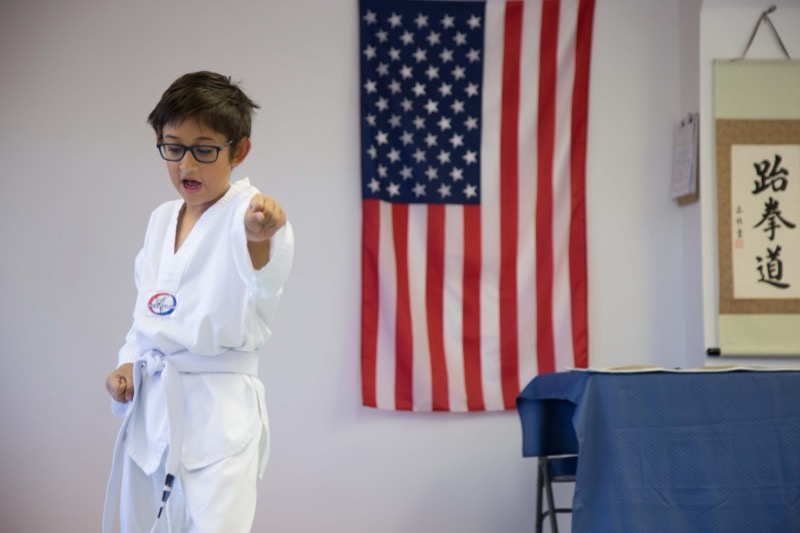
Stepping into a martial arts studio for the first time is an act of profound bravery. As a clinical psychologist and a 5th Degree Black Belt, I often tell my students that the hardest move they will ever make isn’t a high kick, it’s walking through the front door. It is natural to feel a mix of excitement and “first-day nerves,” a physiological response to entering an unfamiliar environment.
At TKD Wellness, we design the first hour to transition you from that state of “fight or flight” into a state of focused, calm engagement. Here is exactly what you can expect during your first session.
1. The Soft Landing: Familiarization
We believe that predictability reduces anxiety. Your experience begins 10–15 minutes before class starts. You’ll be greeted by our coaches and given a brief tour of our facility. Understanding where things are, and meeting the people in charge, helps ground you in the physical space before the training begins.
2. Atmosphere Over Pressure
If you or your child feels overwhelmed, we utilize a “watch-and-join” approach. There is no requirement to jump into the deep end immediately. By observing the class, seeing the laughter, the disciplined drills, and the supportive environment, the brain’s mirror neurons begin to fire, making the eventual transition onto the mats feel like a natural next step rather than a forced performance.
3. The Foundation of Respect: The Bow
The very first physical skill you will learn is the standard attention and bow. This is not just a gesture; it is a psychological reset. We bow to the United States flag, the Korean flag (where Taekwondo originated), and the coaches. This establishes an immediate culture of courtesy and mindfulness, signaling that the dojang is a “brave space” dedicated to mutual growth.
4. Technical Basics (No Sparring!)
A common misconception is that beginners will be asked to fight or spar on day one. This is a myth. Your first class focuses on:
The Middle Punch: Learning the alignment of the wrist and knuckles.
The Kick Basics: Breaking down the mechanics of the “chamber” and the strike of basic kicks like a front kick, axe kick or round kick.
Terminology: You will learn basic Korean terms for these moves, which helps build cognitive focus.
5. The “Effort Over Perfection” Philosophy
In my clinical practice, I often discuss the “Growth Mindset” (Dweck, 2006). We apply this on the mats by prioritizing effort over perfection. We aren’t looking for a perfect kick; we are looking for the willingness to try. This reframes “mistakes” as essential data points for learning, reducing the fear of failure that often stops beginners from progressing.
Psychology Note: Building self-efficacy, the belief in one’s ability to succeed, starts with small, manageable wins in the first 60 minutes (Bandura, 1997).
6. Adaptive Training for Every Body
Taekwondo is for everyone. If you have physical limitations, such as balance issues or previous injuries, we adapt the drills. For example, if balance is a challenge, we may have you use a wall or a bar for stabilization so you can focus entirely on the mechanics of the kick. We remove the barriers so you can experience the power of the movement.
7. Community and Mentorship
You won’t be alone. We partner new students with senior practitioners. This mentorship model ensures you have a “peer guide” who remembers exactly what it felt like to be a white belt. It transforms the studio from a room of strangers into a supportive family.
The First-Day Checklist
Arrival: 10–15 minutes early.
Attire: Comfortable exercise clothes (breathable fabric).
Hydration: Bring a water bottle.
Mindset: Bring your bravery; we will handle the rest.
Final Reflections: The Day After
Before you leave, we’ll check in to see what went well. You might feel a bit of physical soreness the next day, consider that a badge of honor. It is a physical reminder that you chose perseverance over comfort. You were brave enough to start, and that is the most important step in the entire journey.
Ready to experience the benefits of training firsthand? Sign up for a free class at TKD Wellness today.
Can’t make it to the dojang? Check out our comprehensive online Beginners Taekwondo Course on Udemy.
Follow us on YouTube or Facebook!
Written by AI & Reviewed by Clinical Psychologist and Head Coach: Yoendry Torres, Psy.D., 5th Dan
Disclaimer: Please note that some blog posts may contain affiliate links and TKD Wellness will earn a commission if you purchase through those links at no additional cost to you. We use all of the products listed and recommend them because they are companies or products that I have found helpful and trustworthy. Our website is supported by our users.