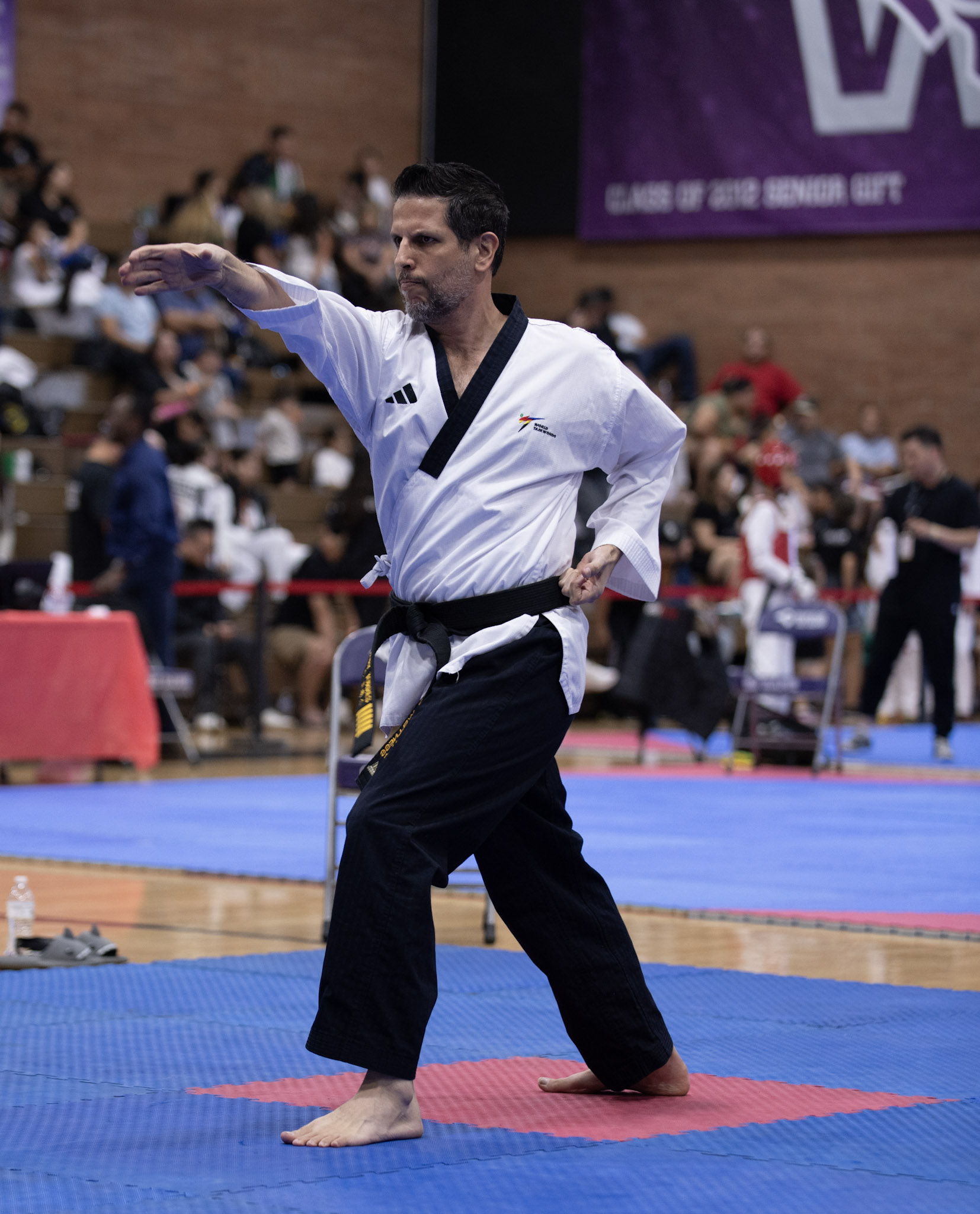
Whether you are a beginner stepping onto the mat for the first time or an Olympic hopeful refining a spinning hook kick, the most powerful tool in your arsenal isn’t your legs—it’s your mind. In clinical psychology and high-performance coaching, we refer to this as imagery or visualization.
Imagery is the deliberate practice of creating or recreating experiences in the mind. It is a bridge between the physical and the psychological, allowing us to train even when our bodies are at rest.
The Science of the “Mental Dojang”
The human brain is remarkably plastic. Research in neuroscience and sport psychology indicates that the brain often cannot distinguish between a vivid mental image and an actual physical event. When you visualize yourself performing a complex Poomsae (form) or a high-level Pada Chagi (counter-roundhouse kick), you are activating the same neural pathways and brain regions used during the actual physical execution.
This “mental blueprinting” allows for:
Skill Refinement: Improving the accuracy of techniques like the chambering of a kick or the rotation of a block.
Muscle Maintenance: Remarkably, studies suggest that vivid imagery can help maintain or even increase muscle growth and strength without physical lifting.
Emotional Regulation: Recreating a happy memory in vivid detail can activate the same physiological feelings of joy and calm in the present moment.
Imagery for Recovery and Resilience
One of the most profound applications of imagery is during periods of injury. When an athlete is sidelined, the fear of losing progress or “falling behind” can lead to significant stress and even depressive symptoms.
Through visualization, an injured student can “practice” their curriculum mentally. By vividly imagining the intensity, focus, and technical precision of their training, they keep those neural connections sharp. This ensures that when they are medically cleared to return, the transition back to physical training is seamless and the “slump” is minimized.
Stress Inoculation and Life Skills
For parents and the general public, imagery serves as a vital component of stress management. We use a technique called stress inoculation, where we visualize potential stressors (like a promotion test, a competition, or a difficult work presentation) and mentally rehearse a calm, successful response.
By visualizing the challenge and your subsequent successful coping, such as using “Dragon Breaths” or positive self-talk, you “inoculate” yourself against the paralyzing effects of pressure. You are essentially training your nervous system to stay in the “optimum energy zone” rather than spiking into high-anxiety jitters.
Coach’s Corner: Actionable Imagery Drills
For the Beginner: Before your next class, spend 5 minutes with your eyes closed. Visualize your Taegeuk forms. Focus on the “Gaze”—where are you looking? See your stances becoming stable and your strikes landing with precision.
For the Athlete: Practice “Reaction Imagery.” Visualize a specific sparring scenario where you make a mistake. Immediately visualize yourself reframing the moment, staying calm, and executing a successful counter-attack.
For the Parent/General Public: Create a “Joy Anchor.” Recall a memory where you felt absolute happiness. Identify the colors, the sounds, and the physical sensations. When you feel stressed this week, close your eyes and return to that image for 60 seconds to regulate your heart rate.
Ready to experience the benefits of training firsthand? Sign up for a free class at TKD Wellness today.
Can’t make it to the dojang? Check out our comprehensive online Beginners Taekwondo Course on Udemy.
Follow us on YouTube or Facebook!
Written by AI & Reviewed by Clinical Psychologist and Head Coach: Yoendry Torres, Psy.D., 5th Dan
Disclaimer: Please note that some blog posts may contain affiliate links and TKD Wellness will earn a commission if you purchase through those links at no additional cost to you. We use all of the products listed and recommend them because they are companies or products that I have found helpful and trustworthy. Our website is supported by our users.