
Have you ever felt like giving up? If the answer is yes, then you’re not alone. I won’t lie, when I train hard, my muscles ache and I sometimes think, “what’s the purpose.” Life would be so much simpler without these aches and pains wouldn’t it? Well, that’s debatable! I know that my life would definitely lack depth and the satisfaction of accomplishment that comes when I persevere through life’s trials rather than giving up. So what does perseverance mean and how do we get better at it?
In my last post, I wrote about Integrity: 3 Reasons Accepting Our Failures Lead to Excellence and how important it is to look at our failures as opportunities for growth. Yes, perseverance is not giving up and finishing what you have started. I like to think of perseverance as also not giving up on yourself or your goals. Perseverance is not only an action but the way we think about life’s challenges. It is a goal oriented mindset that helps you push through the tough workouts or other challenges in life. Let me share 5 tips that I’ve learned from my psychology education, clinical work, and from my years of training and teaching Taekwondo that I think will help you have a mindset of perseverance:
- Develop goals: Goal setting is a blog in itself (coming soon) and is commonly cited by olympic champions as a primary factor leading to their success. Goals act as our compass not only in sport but in life. Goals are vital at directing our energy productively and motivation that fires us not to give up. However, in order for goals to be effective they need to be personally inspirational and meaningful.
- Have shared goals: Whether you’re part of a team or a family, having shared goals makes a huge difference in how all the members work towards a common goal or set of goals rather than against each other. Keeping your shared goal/s in mind at times of hardship comes in handy as it will help guide our behavior towards a mutually beneficial resolution rather than a distancing and destructive resolution.
- Plan to achieve: Once you have a goal, the next step is to work out the fine details that will help you achieve it. There are lots of ways to plan and varying degrees of detail. I suggest keeping it simple but specific and measurable. For example, if your goal is to qualify for a state poomsae tournament, then part of your plan might include to conduct strength training 2-3 times per week, to practice poomsae for one hour and flexibility for 30 minutes 4 times per week, and to make sure you are eating a healthy diet consisting of the recommended protein, carb, and fat intake, and getting 8 hours of sleep nightly.
- Focus on your daily effort: The plan is built on actions such as training, sleep, and nutrition that are within your control. This is important because we can only control what we do and cannot control what others do. For example, we can control if we training or stretching daily or if we put effort into our training or just go through the motions. As you put your plan into action, you will soon begin to notice the very nature of achieving your daily efforts is very rewarding. Actually, sports psychologists have done research that concludes that athletes who focus on their daily effort rather than the end goal are more satisfied with their accomplishments regardless if they lose the tournament compared to athletes who focused on winning gold.
- Accept failures and grow: As mentioned in my previous post, Integrity: 3 Reasons Accepting Our Failures Lead to Excellence, the knowledge we get from failing is priceless and ultimately leads to success if we persevere. Another factor that impacts our ability to persevere is negative self talk, which affects our mood and as a result, our ability to perform at our best. Check out this previous blog post: “Self Control: 3 Mental Abilities That Improve Performance & Wellbeing” for more info on self talk.
Now you have the secret sauce to perseverance, goal setting. Keep your goals in your awareness, or even better, written down. By doing this it will help motivate you towards achieving your goals by more effective training, conflict resolution, and growth. If this post was helpful, please leave a comment below and tell us what’s your answer to our question below.
What goals help you persevere?
Perseverance is one of the five tenets of Taekwondo taught at Taekwondo Wellness. Check out my previous posts if you’re interested in learning about how courtesy, integrity, and self control impact mental health. Also, be on the lookout for my next blog post about indomitable spirit and how it impacts our mental health as well. If you are interested in learning more about our programming, please call 520-333-3320 or visit our dojang at Intuition Wellness Center.
Written by Yoendry Torres, Psy.D., Clinical Psychologist
Image by: BK

 As a clinical psychologist, I find myself looking at the deeper meanings of what my students and clients say and do. For example, how often have we heard a child say “this is easy” while they can barely complete the training drill. This is typically a healthy, normal response in order to maintain our ego or belief that we are “good.” However, the problem lies that this behavior does not demonstrate integrity and can lead to further self deception that limits our ability to improve our skills by learning from our weaknesses. With that said, lets explore the meaning of integrity more and how slight changes in our mindset can make a huge difference in our performance, wellness and lead to excellence.
 When I enrolled in my first Taekwondo class, I remember instructors expressing a strong emphasis on self control. At that time, in my youth, I understood self control to be strictly about being able to control my body in such a way that it would display balance, power, speed, and accuracy. I have come to discover with my clinical psychology education and my continued Taekwondo training, that our ability to control our body movements is just the physical portion of self control. There is an entire other portion that is rarely discussed during Taekwondo training, the mental portion.
 In just about every martial arts class students line up at the beginning of class to salute the flags and their instructor. This tradition teaches students to honor their specific martial art heritage and respect their instructor. Courtesy is one of the tenets of Taekwondo and I would argue that it also teaches students the value of respecting themselves and improving their own mental health while they are at it.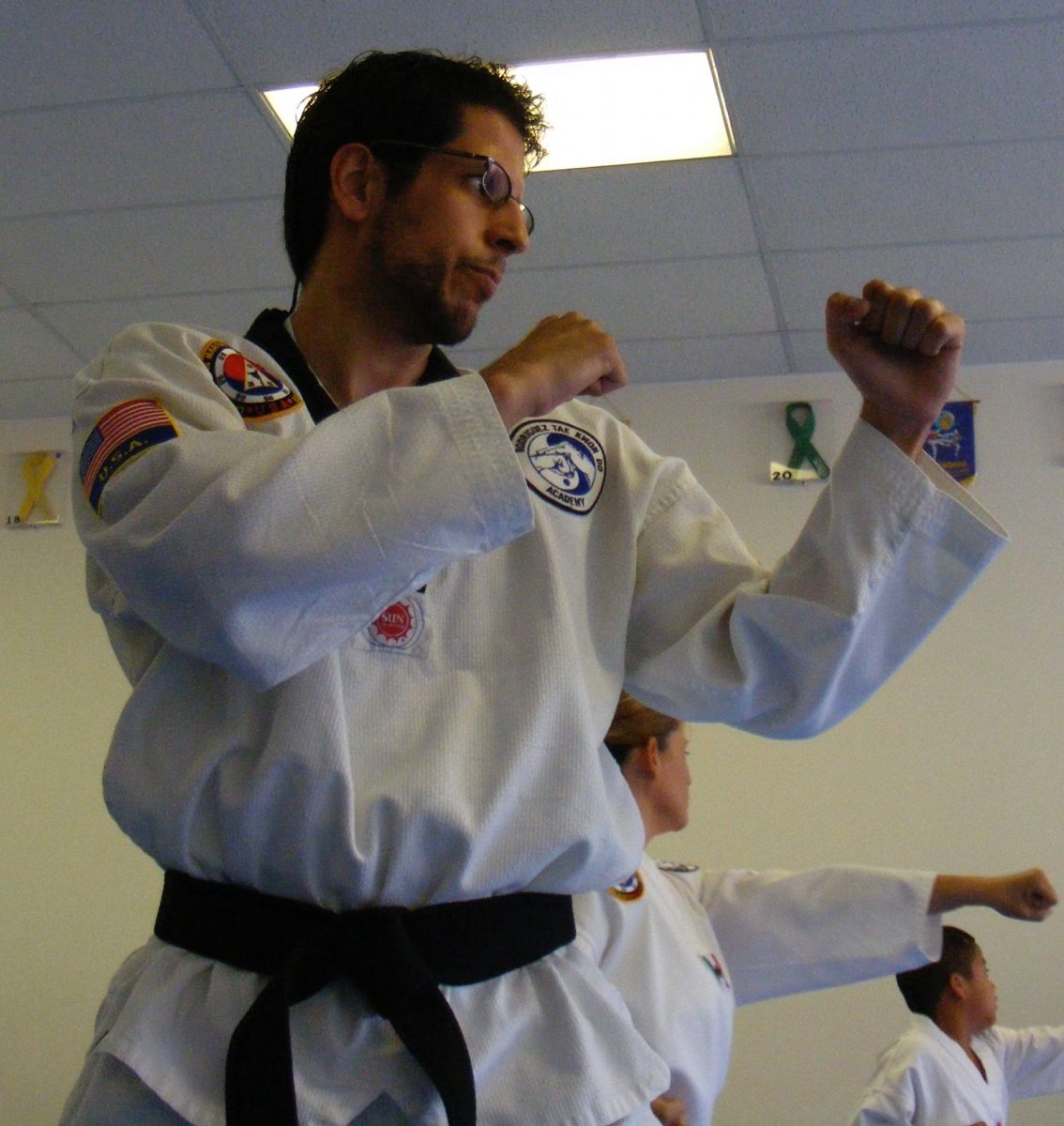
 Hello,
 Taekwondo Wellness has been offering its unique wellness classes to children, adolescents, and adults of all ages and skill levels experiencing emotional, behavioral, or relational problems since 2008. Taekwondo Wellness was developed by Yoendry Torres, a bilingual Cuban American, during his clinical psychology internship (2008-2009) at Illinois Masonic Medical Center in Chicago, Illinois. The program originally had a focus on physical fitness to help treat childhood obesity, which is not only a growing problem in the United States but also more common in youth or adults experiencing mental health issues.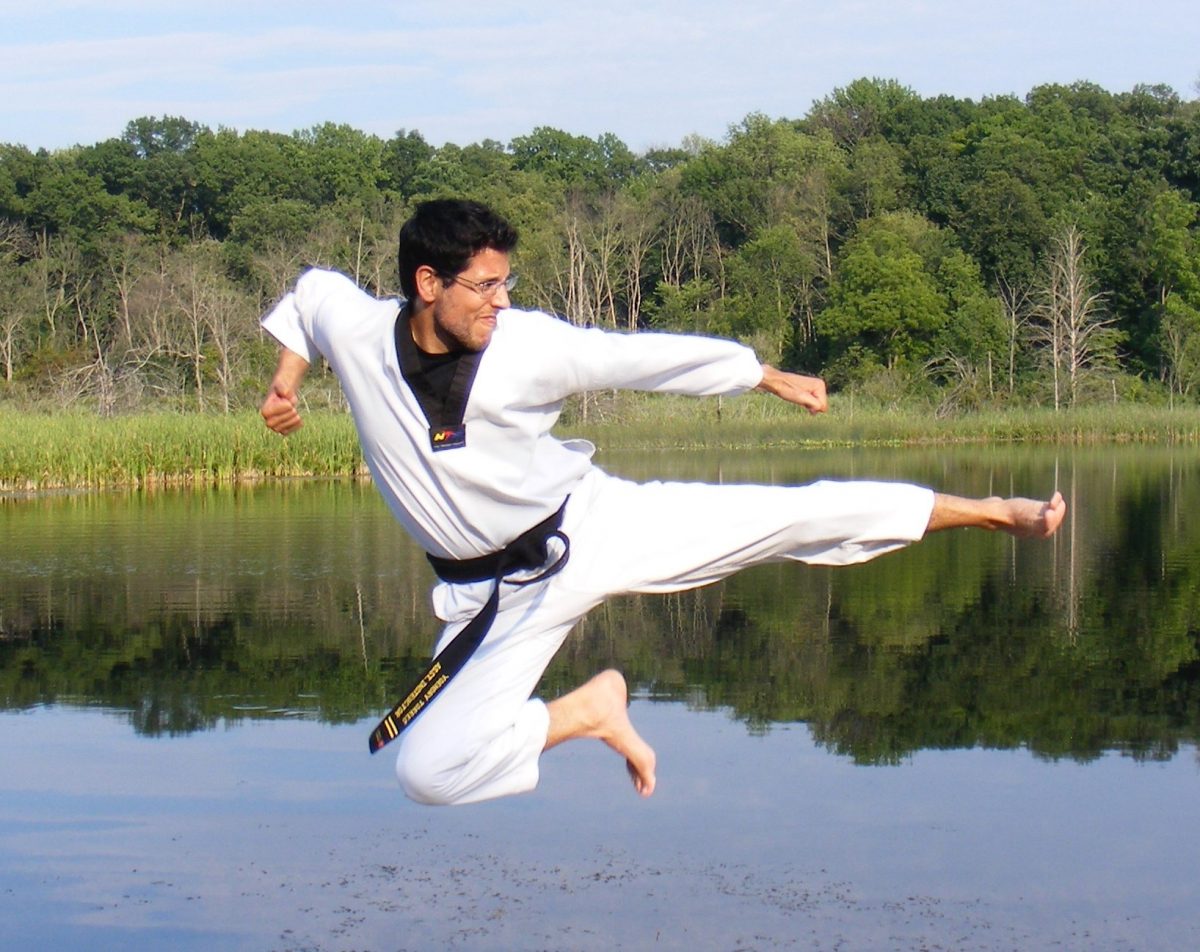
 I’m excited to share that Taekwondo Wellness will be restarting in Tucson, Arizona in 2016. Our team, at Intuition Wellness Center will begin looking for gym space in the northwest side of Tucson early next year. Please stay tuned for more news and updates about this program.